


From Excel to a World Summit for 1,400 humanitarians
Who's who?
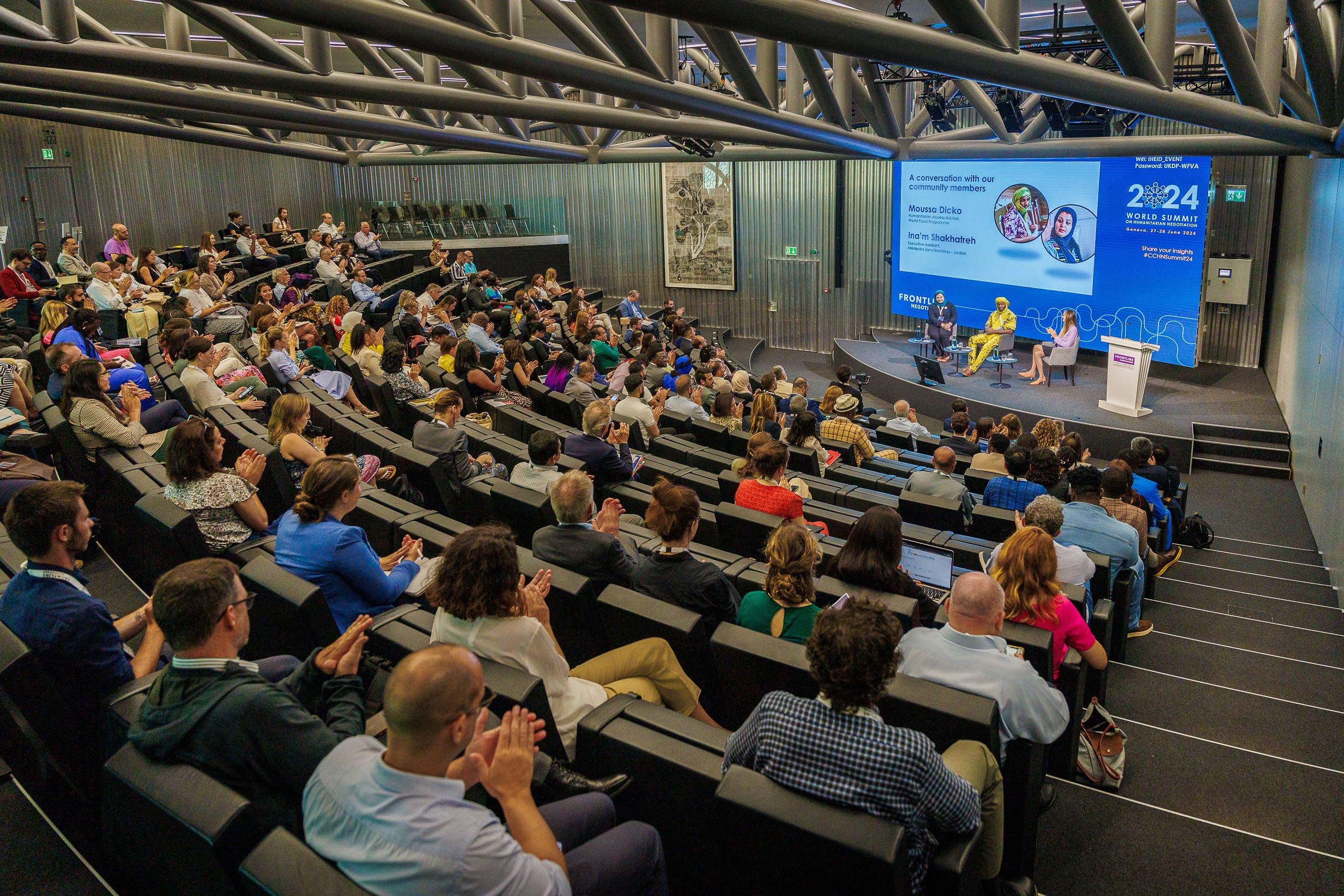
The Centre of Competence on Humanitarian Negotiation (CCHN) supports more than 10,000 frontline humanitarian negotiators worldwide and brings them together each year at the World Summit on Humanitarian Negotiation in Geneva.
The Challenge
More than 1,700 registrants, three languages, in person and online, all managed in Excel. Spreadsheets can hold a guest list. They struggle to hold a summit.
Approach
Together with their team, we built one connected Airtable system covering registration, logistics, programme and feedback. Fast, secure and cost effective, with semi automatic integrations.
Result
Around 1,400 participants from over 120 countries and 54 sessions, all running on one system the team owns.
Outcome summary
The Centre of Competence on Humanitarian Negotiation (CCHN) moved its yearly World Summit on Humanitarian Negotiation from a collection of Excel files to one structured event system, built together with their team. Registration, selection, travel logistics, programme and feedback for more than 1,700 registrants from over 120 countries now live in one place, so the team can run a hybrid, trilingual summit in Geneva with a clear view of every participant, session and room.
Key results
- More than 1,700 registrations screened, around 1,400 participants confirmed
- A hybrid summit: about 270 confirmed in person in Geneva, close to 1,000 online
- Participants from over 120 countries, with Africa as the largest region, followed by Europe
- Registration and logistics forms in English, French and Spanish, feeding one dataset
- 54 programme items across two Community Days and two Summit days, in 12 rooms
- 172 feedback responses, with onsite participants rating the Summit 5.4 out of 6 on average
The Challenge
A summit is not one event. It is a thousand small promises kept at the same time.
Behind every participant sits a chain of steps: registration, selection, confirmation, visa and invitation letter, travel, dietary needs, badge, access to the online platform, session attendance and feedback. Multiply that by more than 1,700 people, three languages, and a mix of in person and online attendance.
Behind every session sits another chain: a room, speakers with approved bios, a person in charge, a tech host, note takers, mic runners, scene set up, materials and an online link.
All of this ran on Excel. Every change in the programme meant updating several files by hand. Every new registration meant copying data from one sheet to the next. And the full picture lived in the heads of a few people.
Spreadsheets can hold a guest list. They struggle to hold a summit.
The result:
- More time spent chasing information
- Less time spent on the people the Summit is for
Approach
We built the system around the participant, not around the spreadsheet. And we built it together with the Centre of Competence on Humanitarian Negotiation (CCHN) team, so the people running the Summit shaped the system they would use every day.
Our role was to make sure it came together fast, securely and without unnecessary cost:
- Fast. A working system in place ahead of the Summit, built with the team instead of handed over at the end
- Secure. Sensitive travel data such as passports and visa documents kept in a dedicated logistics table, separate from general registration data
- Cost effective. Semi automatic integrations with the tools the Summit already relied on, so data flows where it needs to without expensive custom development
In Airtable, the system follows the Summit from first registration to final feedback:
- One participant journey. Each registrant has one record that moves through selection and confirmation, with attendance format, region, sector and organization type captured from the start
- Trilingual by design. Registration and logistics forms in English, French and Spanish, all landing in the same dataset
- Logistics where they belong. Confirmed onsite participants complete a separate logistics file covering Swiss visa, invitation letters, travel policy, arrival airport and dietary needs, linked to their registration
- A programme that knows its own needs. Every session is linked to its room, speakers, team roles, materials, access level (public, internal or invitation only), speaker briefing and online link
- Speakers, donors and VIPs in view. Speaker bios, pictures and proofreading status, plus donor and VIP invitations, tracked alongside everyone else
- Planning and feedback connected. Team tasks link to sessions and rooms, and feedback links back to the sessions people attended
The system stays:
- Understandable for non technical teams
- Flexible enough to change from one edition to the next
- Fully owned and managed by the Centre of Competence on Humanitarian Negotiation (CCHN) team
Result
From Excel files to one source of truth
Registration, selection, logistics, programme and feedback live in one connected system. Everyone works from the same information.
Hybrid and trilingual at scale
Around 1,400 confirmed participants from over 120 countries, in person and online, in three languages, handled in one structure.
A programme that holds together
54 programme items across four days and 12 rooms, each with a clear owner, team and setup. When a session moves, everything linked to it moves with it.
Smoother travel for field participants
Visa, invitation letter and travel information for onsite participants is collected once and kept in one place. That matters when people travel to Geneva from crisis contexts.
Learning built in
172 feedback responses are linked to the sessions people attended, giving the team a solid base to shape the next edition.
Closing line
The Centre of Competence on Humanitarian Negotiation (CCHN) did not just organise an event. It built the operational structure to bring its global community together every year, so the team can focus on the conversations that matter, not on the logistics behind them.
© Photography by Marc Bader – Event Photographer in Geneva
© Videography by Ahmet Eroglu
Loredana Serban
More cases
.jpg)

.jpg)

